AUTHOR
Maggie Brennan
CATEGORY
Educational Consulting
POSTED ON
October 8, 2026
SOCIAL
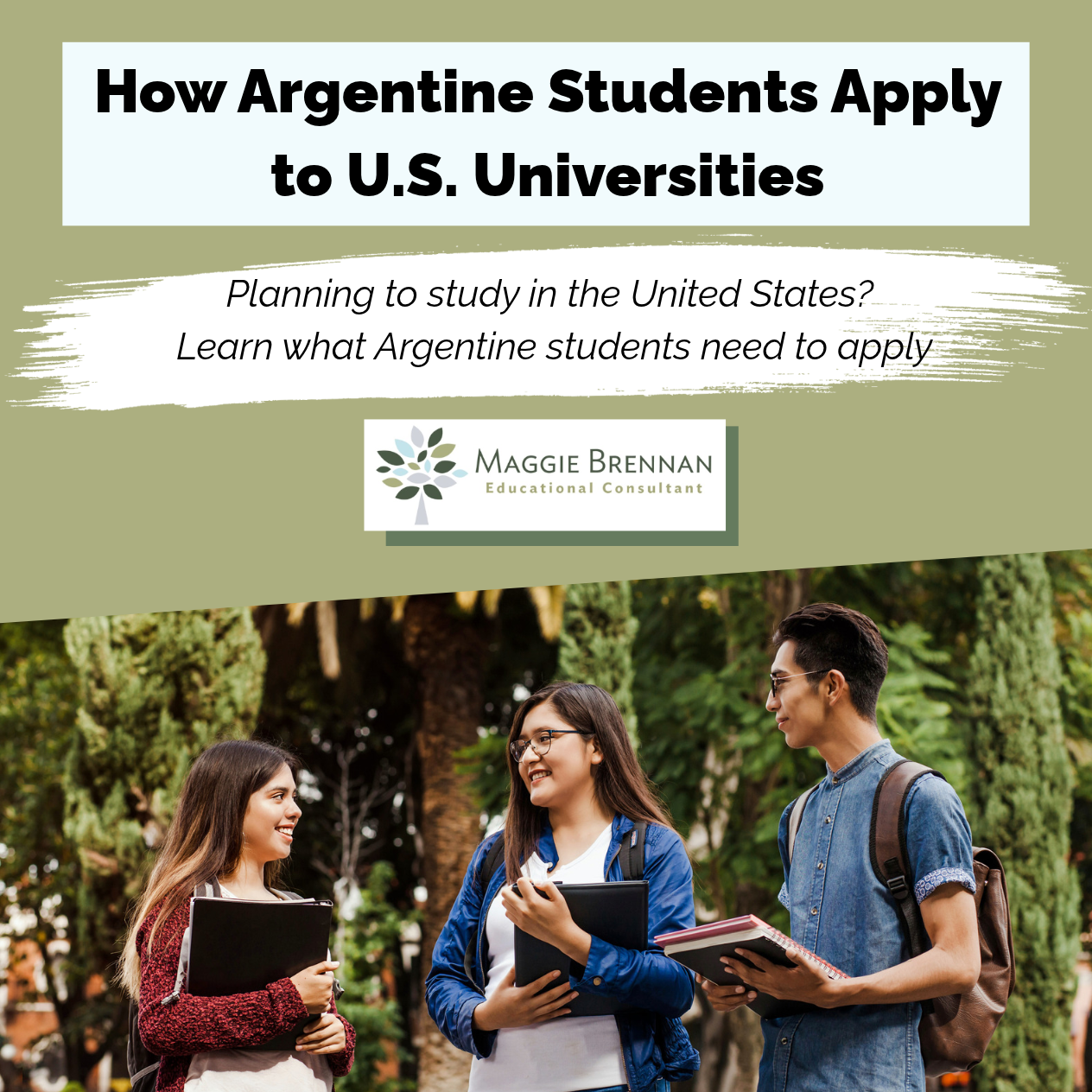
How Argentine Students Apply to U.S. Universities
Planning to study in the United States? Learn what Argentine students need to apply, how scholarships work, and why starting early can make all the difference.
For many Argentine families, sending a child to university in the United States is an exciting possibility. But the application process can be very different from what families are accustomed to in Argentina.
U.S. universities may consider a student’s academic record, extracurricular activities, standardized test scores, personal essays, and letters of recommendation. Students also need to research universities, understand admission requirements, explore scholarships, and meet application deadlines.
One of the most common mistakes is waiting until the final year of secondary school to begin preparing.
A strong university application takes time to develop. Starting early gives students more opportunities to strengthen their academic profiles, explore their interests, and find universities that fit their goals and their family’s budget.
1. Why Starting Early Matters
I generally recommend that Argentine students begin planning for U.S. university admissions during the equivalent of 10th grade in the U.S. education system, or earlier if they need additional English-language preparation.
Here are four important areas to focus on.
Academic performance: Universities review students’ secondary school grades and academic progress. Maintaining a strong academic record throughout secondary school is important, particularly at selective institutions. Students should not assume they can compensate for weaker earlier grades during their final year.
Extracurricular activities: Many U.S. universities want to understand what students do outside the classroom. Sports, music, volunteering, leadership, employment, personal projects, and family responsibilities can all help demonstrate a student’s interests and character. Depth and genuine commitment are generally more valuable than joining numerous activities simply to fill a résumé.
Standardized tests: Some universities require aptitude tests, like the SAT or ACT, while others are test-optional. Policies vary and can change. Students should research their prospective universities’ requirements early and allow enough time to prepare and, if appropriate, retake an exam. That process alone can take months.
University and scholarship research: The United States has over 4,000 colleges and universities, each offering different academic programs, campus environments, admission requirements, and financial assistance opportunities. Starting early gives students time to research the college options, compare programs and possibly even visit them, rather than making rushed decisions just before applications are due.
2. What Do You Need to Apply to a U.S. University?
Requirements vary by institution, but many undergraduate applications include some combination of the following:
- The Common Application: Known as the Common App, this online platform allows students to apply to multiple participating universities using one main application. Some universities use their own application systems instead.
- Secondary school transcripts: Universities generally require academic records showing courses and grades. Argentine students may need English translations and additional documents, depending on the institution.
- SAT or ACT scores: Some universities require these standardized tests, while others allow students to apply without submitting scores.
- English-proficiency exams: International applicants may need to demonstrate English proficiency through an exam such as the TOEFL, IELTS, or Duolingo English Test. Requirements and exemptions vary.
- Letters of recommendation: Teachers and school officials may be asked to describe the student’s academic abilities, character, interests, and potential.
- Personal essays: Students have an opportunity to share their experiences, perspectives, and goals beyond what grades and test scores reveal. Some universities also require additional essays.
- Application fees and other materials: Depending on the university and program, students may need to submit additional documents, portfolios, or other materials.
Students should create a checklist for each university on their list because requirements and deadlines are not the same everywhere.
It is also important to remember that admission decisions are not based on a single formula. Universities may consider different combinations of academics, grades, extracurricular activities, application essays, recommendations, and other factors.
3. Scholarships and Financial Aid: Start Researching Early
For many Argentine families, affordability is one of the most important considerations when deciding whether studying in the United States is realistic.
Tuition and living expenses vary considerably between institutions, and financial assistance for international students differs from one university to another.
Some universities offer merit-based scholarships, which may recognize academic achievement, leadership, talents, or other accomplishments. Others offer need-based financial aid, which takes a family’s financial circumstances into account. Some institutions offer substantial assistance to international students, while others provide almost nothing.
Families should investigate:
- The total cost of attendance, including tuition, housing, meals, insurance, and personal expenses.
- Whether international students are eligible for scholarships or need-based financial aid.
- Whether separate scholarship or financial aid applications are required.
- Whether funding has an earlier deadline than the admission application.
- What expenses remain after financial assistance is awarded.
An important point: being admitted to a university does not automatically mean receiving enough financial assistance to attend.
For families who need financial assistance, finding an affordable college should be part of the research process from the beginning. Identifying universities that fit both the student’s academic profile and the family’s budget can make the entire process more productive.
4. When Should Argentine Students Start?
The following is a general timeline for students who plan to begin university in the United States after completing secondary school in Argentina. Individual schedules will vary according to graduation dates, university deadlines, and the student’s circumstances.
Two to three years before university: Build a strong foundation.
- Focus on academic performance.
- Explore extracurricular interests and develop meaningful projects, hobbies or experiences.
- Strengthen English-language skills.
- Begin researching universities and possible fields of study.
- Discuss family expectations and budget.
Approximately 12–18 months before university: Develop a plan.
- Create a preliminary university list.
- Research admission requirements and scholarship opportunities.
- Prepare for required standardized tests.
- Explore academic programs, campus environments, and costs.
- Identify application deadlines and recommendation requirements.
During the final year of secondary school: Complete the applications.
- Finalize the university list.
- Complete application forms and write essays.
- Arrange for transcripts and recommendation letters.
- Submit required test scores and financial aid applications.
- Track deadlines and confirm that all materials have been received.
Many U.S. universities have deadlines in the late fall or winter for students entering the following academic year, although dates and application rounds vary. Scholarship deadlines may also differ from admission deadlines.
Students should always verify the requirements for their intended entry year directly with each university.
5. How Do You Find the Right University?
Choosing a university involves much more than looking at rankings or selecting a famous name.
Some students thrive at large research universities, while others prefer smaller colleges with more intimate learning environments. Some want to live in a major city; others prefer a traditional campus in a smaller community.
Students should consider their intended major, academic interests, campus environment, location, opportunities for internships and research, student support, and overall cost.
They should also consider whether a university offers the right balance of academic challenge, personal growth, and financial feasibility.
The best university is not necessarily the most prestigious one. It is the one that best fits the individual student.
For Argentine families navigating an unfamiliar education system, finding that fit requires thoughtful research and an understanding of how U.S. universities evaluate applicants.
Start Planning Before the Final Year
Applying to university in another country can feel overwhelming, especially when students and parents are unfamiliar with the process.
Starting early gives students time to develop a strong academic and extracurricular profile, prepare for exams, research universities, and understand their financial options. It also gives families more time to make informed decisions without the pressure of approaching deadlines.
Every student has different strengths, interests, and goals. A thoughtful admissions plan should reflect those differences rather than follow a one-size-fits-all approach.
Need Guidance on U.S. University Admissions?
At Brennan Consulting, I help students and families navigate international university admissions with personalized guidance and a focus on finding the right fit.
As an American university admissions counselor based in Argentina, I bring more than 25 years of experience in education in the United States and Argentina. I understand both the U.S. higher education system and the questions Argentine families face when considering an international education.
I also work with students from all around Latin America, to research universities, understand application requirements, plan for standardized tests, develop their applications, and explore scholarship opportunities.
Thinking about studying in the United States? Contact Brennan Consulting to schedule a free initial consultation and start planning your path to university abroad.